Pay Per Head, White Label and Turnkey Models Explained
A structural comparison of common sportsbook operating and supply models.
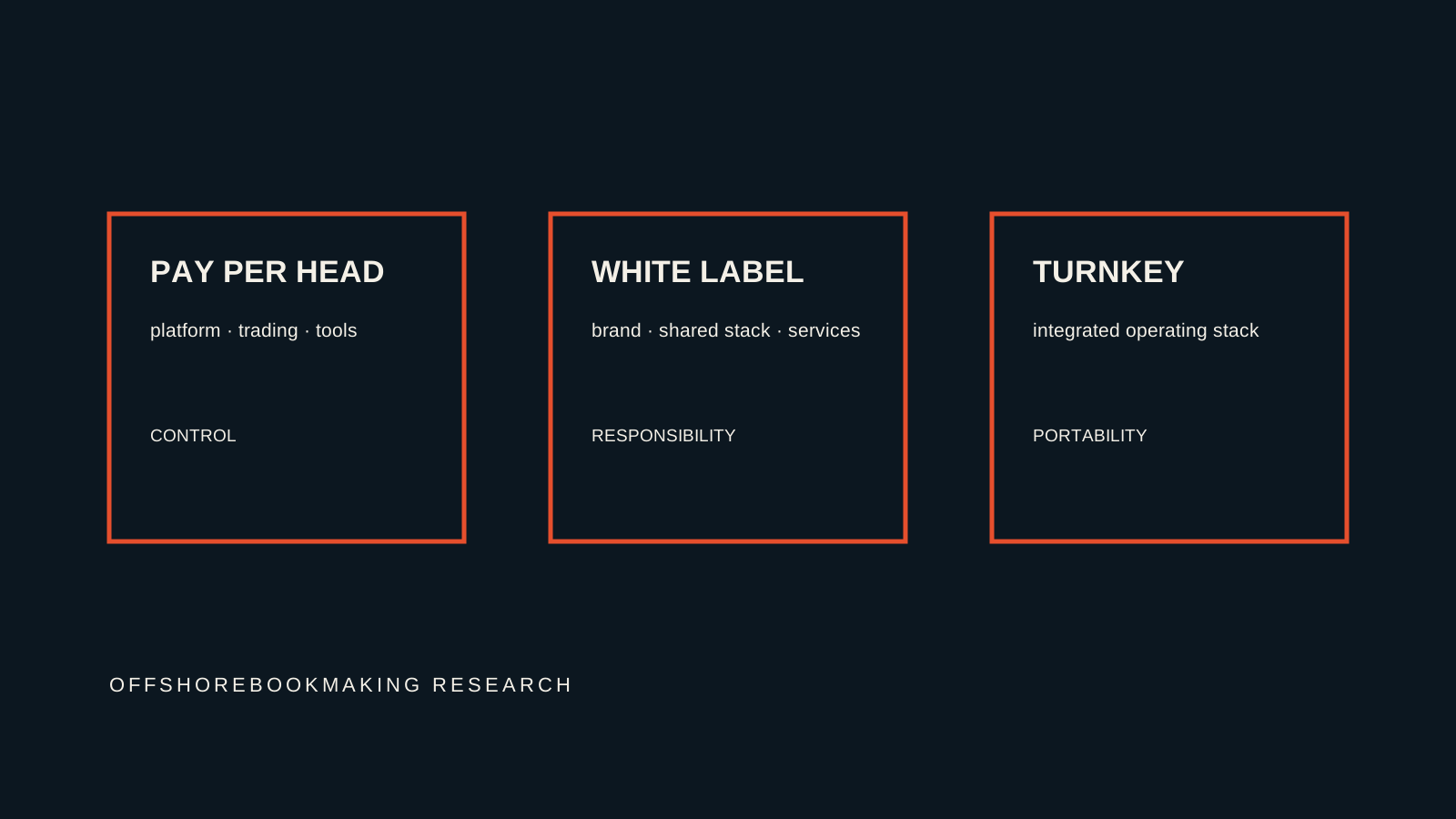
Operating model is an architecture decision
A sportsbook operating model determines far more than the commercial label shown in a sales proposal. It defines who owns the customer relationship, who controls the platform, where trading decisions are made, which party holds operational responsibility and how easily the business can replace a supplier later. Pay Per Head, white label and turnkey are commonly used terms, but vendors do not always use them consistently. A useful comparison therefore starts with responsibilities rather than names. The operator should map account ownership, payments, data, trading, risk, customer service, reporting, compliance, front-end control and intellectual property. That map connects directly with OffshoreBookmaking research on Technology and Data because the operating model determines who controls those layers and who receives the evidence when something fails.
What Pay Per Head usually means
Pay Per Head, often shortened to PPH, generally describes a service model in which an operator pays a provider according to the number of active players or another agreed usage measure. The provider may supply account management, wagering software, lines, reporting and operational tools, while the operator remains responsible for acquiring and managing its customers. The exact boundary varies substantially. Some PPH services are primarily software and trading infrastructure; others bundle call-center functions, payment support or broader back-office services. The commercial attraction is variable cost and a lower initial technology burden. The architectural risk is assuming that a per-player price explains the whole relationship. Operators still need to identify who controls player records, credentials, transaction history, limits, market configuration, exports and domain-facing integrations. Those details determine whether the business is portable or deeply dependent on the provider.
White label shifts more of the operating stack
A white-label arrangement normally allows a brand to launch on infrastructure operated substantially by another company. The supplier may provide the core platform, trading, integrations, payment connections, compliance tooling and sometimes licensing or regulated-market access where legally available. The customer-facing brand can appear independent even though critical systems are shared underneath. This can reduce time to market because the brand does not have to assemble every component. It can also reduce direct control. Product roadmaps, supported jurisdictions, payment methods, release timing and risk policies may depend on the platform owner. A serious review should separate visual branding from operational ownership. Changing colors, logos and content is not the same as controlling the ledger, account model, market engine or data contracts. White label is therefore best evaluated as an allocation of control, responsibility and dependency rather than simply a faster website launch.
Turnkey can mean complete delivery without identical ownership
Turnkey is one of the broadest terms in sportsbook supply. In its strongest sense it describes a package intended to deliver most of the components needed to operate: platform, front end, trading or trading integrations, reporting, payments interfaces, CRM connections, content and operational tooling. Yet turnkey does not automatically mean that the buyer owns those components. A supplier can deliver a complete operating environment while retaining the underlying software, hosting and vendor relationships. Another vendor may sell or license a more portable stack with greater control. The important questions are therefore what is included, what is merely integrated, what is subcontracted and what remains after termination. Buyers should request a component-level schedule rather than rely on the word turnkey. That schedule should identify system owner, data owner, hosting party, support responsibility, service level and replacement path for every material component.
Control of customer and transaction data is central
The most consequential contract questions often concern data rather than interface features. An operator needs to know whether it can export complete customer, wager, wallet, limit, bonus, settlement and audit histories in a documented format. Access during normal operations is not enough; termination rights matter as well. If exports are partial, proprietary or available only through a provider-controlled dashboard, migration can become expensive or impossible. Canonical identifiers should remain stable across exports so historical records can be reconciled with new systems. The same principle applies to source and market data described by the Data desk: provenance and timestamps should survive operational boundaries. Data ownership language should also distinguish legal ownership, permitted processing, retention and practical technical access. A contract can say that the operator owns data while the architecture still makes that data difficult to retrieve or use.
Trading responsibility changes the risk profile
Trading can be supplied, shared or retained by the operator. A managed service may create prices, move lines, suspend markets, set limits and settle events. Another model may provide a platform while the operator runs its own trading team or connects an external trading supplier. These structures create different dependencies and staffing requirements. The review should identify who has authority to change a market, what automation is used, how exceptions are escalated and which logs are available after a disputed decision. It should also distinguish sports data from trading decisions. Receiving a fast event feed does not explain how a price was produced or why a market remained open. Clear responsibility is especially important when multiple vendors participate because a platform provider, data supplier and managed trading service can each control a different part of the same customer transaction.
Payments and wallet architecture can determine portability
Payments are often presented as a list of supported methods, but the underlying structure matters more. The operator should know who holds merchant relationships, who controls the wallet ledger, where balances are recorded and how deposits, withdrawals, reversals and chargebacks are reconciled. A white-label provider may centralize these functions, while a more modular turnkey deployment may allow the operator to contract directly with payment companies. Neither structure is universally preferable; they create different responsibilities and switching costs. The critical issue is whether transaction state can be independently reconciled. If the platform is the only place where a balance can be reconstructed, migration risk rises. Operations teams should also document failure modes: what happens when a payment provider succeeds but the sportsbook callback fails, or when a withdrawal enters manual review. Reliable systems preserve an auditable transaction sequence instead of relying on a final balance alone.
Front-end freedom is not the same as platform freedom
Brands often focus on whether they can customize the website or mobile experience. That matters, but front-end flexibility can hide deeper constraints. A provider may offer extensive design control while keeping event models, account services, promotions and APIs proprietary. Conversely, a visually standardized service may expose clean APIs and portable data. Buyers should examine which interfaces are documented, whether versioning is predictable, what rate limits apply and whether integrations can be developed without vendor intervention. The Technology research framework is useful here: identify each layer and the contract between layers. A replaceable front end requires stable services underneath it, while a replaceable platform requires the operator to control identities and historical data above it. Architecture should be evaluated according to boundaries and interfaces, not the apparent uniqueness of the website.
Commercial pricing must be modeled beyond the headline fee
PPH suggests a per-player charge, white label may involve revenue share, and turnkey projects may combine setup, license, hosting, support and transaction fees. In practice, contracts can mix all of these. A useful cost model separates fixed, variable and pass-through expenses and tests them at different volumes. It should include data feeds, trading, payment processing, messaging, identity services, affiliate systems, premium support and custom development where applicable. Minimum commitments and tier changes can materially alter unit economics. Exit costs deserve their own line because migration, parallel operation and historical data extraction can exceed an apparent setup saving. Commercial comparison should therefore use the same defined operating scope for every proposal. A cheaper headline price is not directly comparable when another supplier includes functions that would otherwise require separate contracts or internal staff.
A due-diligence framework for choosing an operating model
OffshoreBookmaking evaluates operating models by mapping responsibility, control, evidence and exit path. First define the business functions required at launch and the functions the operator expects to own later. For each component, identify the supplier, contractual owner, technical interface, data produced, service level and fallback. Then test operational scenarios: provider outage, stale sports data, disputed settlement, payment mismatch, account restriction, security incident and termination. The model should explain who acts and what evidence is available in each case. Finally, evaluate portability. Can customers, balances, wagers, settings and historical records move to another system without recreating identity from names or spreadsheets? Pay Per Head, white label and turnkey can all be workable structures when their boundaries match the operator's objectives. The research task is not to declare one label superior, but to make the dependencies visible enough for an informed commercial and technical decision.
Exit planning should begin before launch
Exit planning is most effective when it is designed before the first customer account is created. The operator should document export formats, authentication handover, domain and certificate control, integration credentials, retention periods and the process for running old and new systems in parallel. It should also define how open wagers, pending withdrawals and unsettled adjustments are treated during transition. These details convert portability from a contractual promise into an executable procedure. Regular export tests can confirm that records remain complete as the platform evolves. A supplier relationship may last for years, but preserving a tested exit path protects negotiating flexibility and reduces operational disruption if commercial, technical or regulatory circumstances change.