How the Offshore Sportsbook Industry Ecosystem Works
A structural guide to operators, B2B suppliers, platforms, data, trading, payments, distribution and industry relationships.
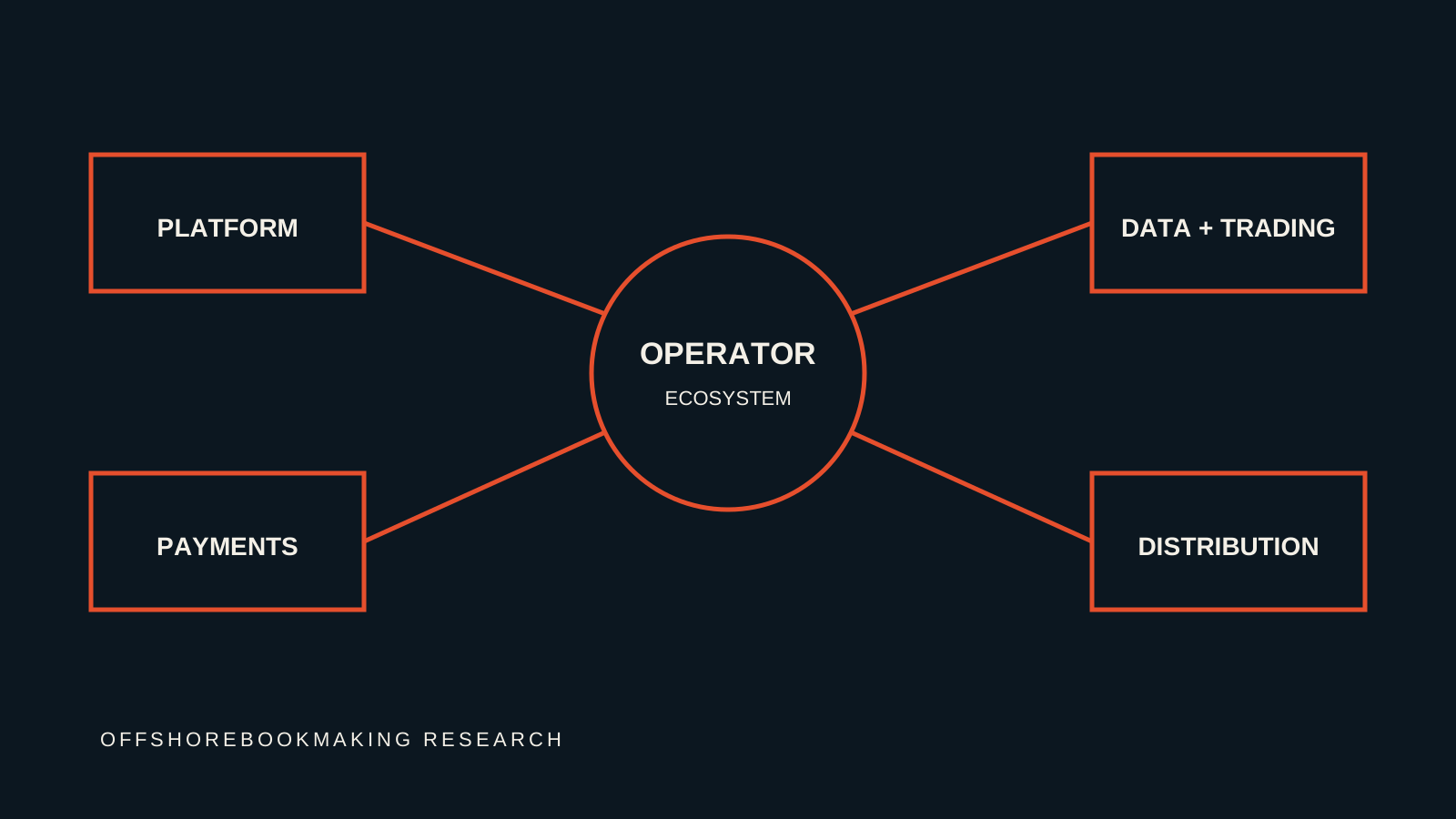
The betting industry is an ecosystem, not a single company
A sportsbook visible to a customer is only the surface of a wider commercial chain. Behind it can sit platform vendors, trading services, sports-data companies, payment processors, identity tools, messaging systems, affiliate networks, hosting providers, security specialists and regulatory services. Some companies integrate many of these functions; others assemble a stack from specialists. Understanding the industry requires separating brand, operator, supplier and technology owner. That distinction prevents researchers from attributing every function to the name shown on the website. It also explains why two brands can look different while sharing infrastructure, and why one platform can support businesses with very different commercial strategies. OffshoreBookmaking will use this ecosystem view to study corporate relationships, dependencies and market changes without confusing marketing presentation with operating architecture.
The value chain begins before a wager exists
Before a customer sees a line, multiple systems may have collected schedules, teams, participants, results and market signals. Data feeds turn real-world events into objects a platform can process. Trading converts information and models into markets and prices. The platform connects those markets with accounts, limits and wallets. Payments move money; identity and compliance tools determine permitted actions; CRM and messaging systems manage communication. The Data desk studies provenance and normalization, while Technology examines the layers carrying that information. Industry examines how the companies controlling those layers relate commercially. Value therefore does not sit only in a betting interface. It can reside in reliable data, distribution, intellectual property, integrations and operational capability. Mapping the chain makes it possible to understand where a supplier is genuinely differentiated and where it depends on another company upstream.
B2C and B2B businesses follow different economics
A B2C operator acquires and serves players, manages a consumer brand and directly carries much of the commercial customer relationship. A B2B company sells capabilities to operators: platform technology, content, trading, data, payments or other services. Some groups participate on both sides. The distinction matters because revenue, costs and risks cannot be interpreted in the same way. A B2C operator may focus on acquisition, retention and betting margin, while a B2B supplier may depend on licence fees, revenue share, transaction volume or minimum commitments. A partnership between them can be strategically important without implying corporate ownership. Accurate industry research should record which entity contracts with which counterparty, what service is supplied and how the relationship is described, rather than infer ownership or control from logos appearing together on a website.
Platforms and suppliers create infrastructure effects
When a platform supports accounts, wallets, wagers, reporting and integrations, replacing it can touch almost every part of a business. That depth creates switching costs and makes the vendor strategically important. Dependency is not automatically weakness: a specialized platform may provide scale, security and development speed that would be expensive to reproduce internally. Industry analysis should instead measure how modular the relationship is. Documented APIs, complete exports, stable identifiers and clear contracts can reduce switching cost. Closed systems and difficult data extraction can increase it. This connects directly with the Operations desk's work on Pay Per Head, white label and turnkey structures. The useful question is not merely who supplies the platform, but which parts of the operator become attached to it and which can be replaced independently without reconstructing customers, balances or history.
Sports data is a strategic commercial layer
Sports-data suppliers do not sell only numbers. They sell coverage, speed, structure, rights, support and operational reliability. An operator may need schedules and results across thousands of events while demanding much lower latency for live betting. It may use different sources for editorial statistics, settlement, trading or verification. Catalogue size alone therefore does not describe supplier value. Industry research should distinguish official data, first-party collection, aggregation, redistribution and derived products when those categories are documented. It should also examine usage rights because technical access to a data point does not necessarily create commercial rights to redistribute it. The Data desk goes deeper into quality and provenance; Industry examines how those capabilities translate into commercial positions, partnerships and dependencies within the ecosystem.
Managed trading and risk can be separate businesses
Not every operator builds an internal team to create markets, move prices and manage exposure. Suppliers offer managed trading, odds feeds, risk tools or combinations of these services. The boundary between software and operation can matter: a system may recommend an action while another company retains authority to execute it. Commercial structures also vary, from fixed fees to arrangements tied to volume or performance. Comparing companies therefore requires knowing what responsibility they actually assume. A supplier delivering prices does not necessarily manage customer limits, and a platform displaying markets did not necessarily originate those prices. Mapping these functions helps explain partnerships, acquisitions and dependencies. It also connects corporate news with concrete technical consequences rather than treating every supplier announcement as an isolated business event.
Payments connect betting with financial infrastructure
Deposits and withdrawals depend on banks, acquirers, processors, wallets, fraud services and other intermediaries. Method availability changes by jurisdiction, currency, risk profile and commercial relationship. A row of payment logos therefore does not describe the full financial architecture. An operator may contract directly for some services and receive others through its platform or white-label provider. Commercial terms can include transaction charges, foreign-exchange costs, reserves, chargebacks and withdrawal fees. Industry will study these relationships as part of the supply stack, while Regulation examines applicable obligations and Operations studies reconciliation. Resilience matters too: relying on one route can create operational risk, but adding providers without a canonical ledger can increase complexity. The commercial structure should be evaluated together with the transaction evidence it produces.
Affiliates and distribution form another economic layer
Customer acquisition can depend on owned media, advertising, sponsorships, affiliate agreements and other distribution networks. In an affiliate model, a partner may receive CPA, revenue share, a hybrid arrangement or another negotiated payment. These structures affect acquisition economics and can create long-lived relationships between operator and publisher. Responsible comparison, however, must distinguish published terms from private agreements that cannot be observed. It must also separate visibility from causation: frequent placement on comparison sites does not by itself prove market share or profitability. OffshoreBookmaking will treat distribution as a layer that can be studied through available evidence such as programs, documented terms, presence, changes and disclosed relationships. When a commercial figure is not public, the research should mark it unknown rather than manufacture an estimate.
Consolidation can reshape technology and commercial relationships
Mergers and acquisitions can bring operators, platforms, content studios, data suppliers or specialized services under one corporate group. The industry effect depends on which assets and contracts are actually integrated. An acquisition may expand distribution, reduce third-party dependency, add intellectual property or simply change financial ownership. Researchers should not assume that two products will technically merge because their companies share an owner. Analysis needs dates, legal entities and evidence about operational integration. It is also useful to observe which relationships survive a transaction: external supplier contracts, brands, teams and platforms can remain in place for years. OffshoreBookmaking will analyze consolidation as verifiable changes in control and capability rather than turning every corporate transaction into an unsupported story of dominance.
Scale needs comparable measurements
Words such as leader, global and major provider appear frequently in corporate communications but offer little comparative value without a defined metric. Scale can mean revenue, betting volume, active players, regulated markets, events covered, transactions, employees or B2B customers. Each answers a different question. Industry research should preserve period, currency, population and definition beside every figure. If two companies disclose different metrics, they should not be forced into an artificial ranking. It is equally important to distinguish audited figures, regulatory filings, corporate presentations and third-party estimates. The goal is not to prohibit estimates but to label their provenance and limitations. This discipline allows historical comparisons to accumulate without presenting false precision and makes later updates easier when a company changes its reporting definitions.
Supplier relationships need identity and time
The ecosystem changes continuously. An operator can migrate platforms, add a data supplier, replace a processor or enter a new jurisdiction. An industry knowledge base should therefore record relationships with effective and observed dates rather than store them as permanent truths. The same entity may use different suppliers by product or market. Stable corporate identity is also necessary when trading names, brands or ownership change. This principle mirrors the canonical approach in the Data desk: first resolve which entity something is, then record the relationship. Research that preserves history can explain when a dependency appeared and when it ended. That is more useful than overwriting a current profile and losing the context needed to interpret older news, incidents or commercial decisions.
A framework for researching the offshore betting industry
The Industry desk will organize future research around entities, capabilities, relationships, markets and evidence. For each company, it will distinguish brand, legal entity and known function. For each relationship, it will record what service connects the parties, when it was observed and what evidence supports the claim. Metrics will retain their period and definition. Acquisitions will be treated as ownership events until there is evidence of operational integration. This framework connects with Technology to understand systems, Data to preserve provenance, Operations to map responsibility and Regulation to contextualize permissions. The objective is not a static list of important companies but a verifiable representation of how the betting industry is built, supplied and transformed. That structure will let future company profiles, comparisons and provider analysis share a common foundation and evolve without rewriting history.